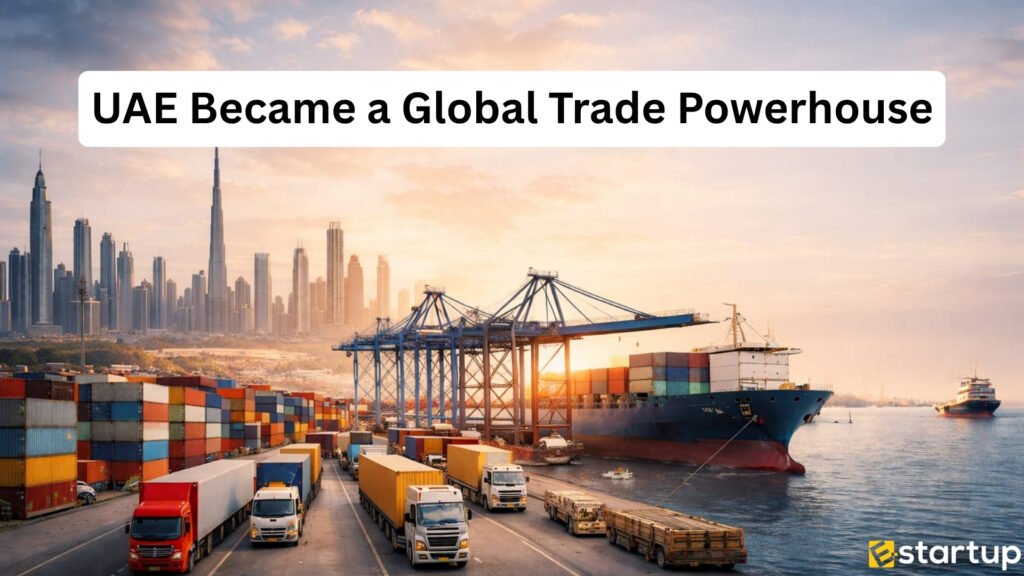
Over the past few decades, the United Arab Emirates (UAE) has transformed itself from a modest regional trading hub into a global trade powerhouse. Its strategic location between Asia, Europe, and Africa has played a huge role, but it’s the country’s smart policies, world-class infrastructure, and embrace of technology that have truly set it apart.
As of 2026, the UAE continues to expand its reach in international trade, drawing in investors, multinational corporations, and logistics companies from around the world. Let’s explore what makes this small but ambitious nation a giant in the world of commerce.
1. Geographic Advantage: Connecting Continents
The UAE’s position on the Persian Gulf is more than just scenic—it’s strategic. The country sits at the crossroads of some of the world’s busiest shipping lanes, making it a natural hub for goods traveling between Asia, Europe, and Africa.
Take Jebel Ali Port in Dubai, for example. Operated by DP World, it’s one of the largest container ports in the world, handling millions of containers each year. Its deepwater docks and state-of-the-art logistics systems allow ships to load and unload faster than in most other ports globally.
Air cargo is just as strong. Dubai International Airport and Al Maktoum International Airport connect the UAE to more than 240 destinations worldwide. Combine that with the country’s well-developed highways, railways, and logistics corridors, and you have a seamless system that moves goods quickly and efficiently.
Key terms: UAE trade hub, Jebel Ali Port, Dubai International Airport cargo, UAE logistics hub.
2. Free Zones and Business-Friendly Policies
One of the UAE’s biggest draws for businesses is its free economic zones. These zones make it easy for foreign investors to operate with perks like:
-
100% foreign ownership
-
Tax exemptions on profits and imports
-
Simplified licensing processes
-
World-class facilities
Free zones such as Jebel Ali Free Zone (JAFZA), Dubai Airport Free Zone (DAFZA), and Abu Dhabi Global Market (ADGM) have attracted not only multinational giants but also startups looking for a supportive business ecosystem.
Government policies also make doing business in the UAE easier than in many other countries. Initiatives like the UAE Economic Vision 2031 emphasize economic diversification, technological innovation, and sustainable growth—helping sectors like logistics, manufacturing, and e-commerce thrive.
Key terms: UAE free zones, JAFZA Dubai, Abu Dhabi Global Market, UAE Economic Vision 2031, UAE investment opportunities.
3. Advanced Infrastructure: The Backbone of Trade
Infrastructure is the silent hero behind the UAE’s trade success. The country has poured billions into modernizing its ports, airports, and transportation networks.
-
Ports: Automated container terminals, AI-powered logistics, and robotic cranes make unloading and loading faster and safer.
-
Airports: AI and IoT systems track cargo in real time, speeding up customs clearance and reducing delays.
-
Transportation: Projects like Etihad Rail connect industrial zones to ports, making freight transport smooth and efficient.
Thanks to these investments, goods move across the UAE—and beyond—faster than in many parts of the world.
Key terms: UAE infrastructure development, smart logistics UAE, Jebel Ali container automation, Etihad Rail freight.
4. Embracing Technology in Trade and Logistics
The UAE doesn’t just build infrastructure—it makes it smart. Technology plays a huge role in making trade faster and more reliable:
-
Blockchain: Cuts down on paperwork and reduces fraud in trade documentation.
-
AI and Machine Learning: Helps companies optimize shipping routes, forecast inventory, and manage supply chains.
-
Automation and Robotics: Speeds up cargo handling in ports and warehouses.
Institutions like Mohamed bin Zayed University of Artificial Intelligence are pioneering research in AI that supports smarter logistics, better trade forecasting, and even smart city initiatives.
Key terms: UAE AI logistics, Mohamed bin Zayed AI University, blockchain trade UAE, smart ports Dubai.
5. Global Trade Agreements and Partnerships
The UAE’s success isn’t just about location and technology—it’s also about strategy. The country has built an extensive network of trade agreements that expand market access and strengthen partnerships:
-
Bilateral trade deals with countries in Asia, Europe, and Africa
-
Active membership in the World Trade Organization (WTO)
-
Partnerships with international logistics and shipping providers
These agreements increase trade volumes and cement the UAE’s reputation as a reliable global trade partner.
Key terms: UAE trade agreements, UAE global partnerships, UAE export growth, Dubai trade deals.
6. The Private Sector’s Role
The UAE’s private sector has been just as important as government policy. Companies like DP World, the Emirates Group, and other multinational logistics firms have invested heavily in infrastructure, technology, and workforce development.
The UAE’s strategic location, stable economy, and investor-friendly environment make it an attractive choice for global businesses. This combination has created a thriving ecosystem for trade, finance, and technology.
Key terms: DP World UAE, Emirates Group logistics, UAE multinational companies, Dubai business hub.
7. Sustainability: Future-Proofing Trade
Trade in the UAE isn’t just about speed and efficiency—it’s also about sustainability. In line with COP28 initiatives and the Net Zero 2050 Strategy, the UAE is moving toward green logistics:
-
Ports powered by renewable energy
-
Eco-friendly transportation for freight
-
Sustainable supply chain practices
By prioritizing sustainability, the UAE attracts environmentally conscious investors and positions itself as a leader in responsible global trade.
Key terms: UAE sustainable trade, COP28 UAE, UAE green logistics, Net Zero 2050 UAE.
Conclusion: Shaping the Future of Global Trade
The UAE’s rise as a global trade powerhouse is no accident. Its strategic location, cutting-edge infrastructure, innovative technologies, forward-thinking policies, and focus on sustainability all contribute to its leadership on the world stage.
In 2026, the UAE isn’t just participating in global trade—it’s shaping the future of international commerce, setting new standards for efficiency, investment, and collaboration.