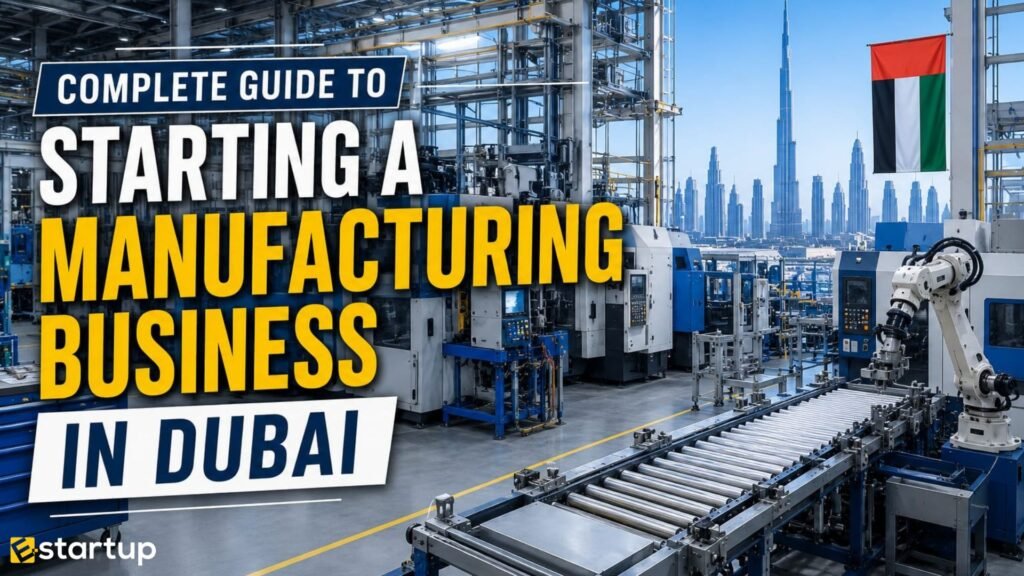
Dubai has become one of the top industrial and manufacturing hubs in the world. This is because of the strategic location of Dubai between Asia, Europe, and Africa, excellent infrastructure facilities, tax havens, and supportive government policies. Whether you want to manufacture food items, clothing, packaging materials, electronics, furniture, or any other industrial goods, it is important for you to be aware of the steps involved in setting up a company.
Here we provide you with all the information that you need about starting a manufacturing business in Dubai in 2026.
Why Start a Manufacturing Business in Dubai?
Apart from being a trading center, Dubai is also becoming an industrial giant. Government of Dubai still continues its investments into manufacturing sector through operations like Operation 300bn, industrial zones and logistic facilities.
Benefits
- 100% foreign equity in majority of mainland and most free zones activities
- Prime geographical location for reaching international markets
- Excellent port and airport facilities – Jebel Ali Port and Dubai International Airport
- Modern industrial infrastructure
- Business-friendly laws
- Access to international labor force
- Logistic networks
These factors make a good choice for entrepreneurs to start their own profitable manufacturing business in Dubai.
Step 1: Choose the Right Manufacturing Activity
First, determine which manufacturing process you would like to conduct in your factory. There are many different types of industrial processes that are permitted in Dubai, such as the following:
- Food and beverages manufacturing
- Textile and garments manufacturing
- Printing and packaging manufacturing
- Manufacturing of plastic products
- Furniture manufacturing
- Metal manufacturing
- Electrical and electronic equipment assembly
- Manufacture of cosmetics and personal care products
- Manufacture of building materials
Step 2: Decide Between Mainland and Free Zone
Mainland Manufacturing Company
The mainland company is licensed by the Dubai Department of Economy and Tourism (DET) and enables you to:
- Sell directly in the UAE market
- Bid on government tenders
- Open branches in multiple locations in the UAE
- Develop operations without geographical limitations
Free Zone Manufacturing Company
Industrial free zones popularly chosen are:
- Jebel Ali Free Zone (JAFZA)
- Dubai Industrial City
- Dubai South
- Dubai Silicon Oasis (for technology-related manufacturing)
Benefits of free zones include:
- 100% foreign investment
- Exemption from customs duties in some instances
- Facilitation of import and export processes
- Industrial facilities
In case you are planning to engage in export manufacturing activities, then a free zone could be ideal for you. In case you are planning to sell your products in the UAE, then a mainland business could work for you.
Step 3: Reserve a Trade Name
Pick a unique name for the business that meets UAE name requirements.
The name must:
- Be descriptive of the business
- Not contain any offensive or religious words
- Be different from the one used by any registered company
- Contain the correct business structure (LLC, FZE, FZCO, etc.)
Trade name registration can be done through the appropriate licensing body.
Step 4: Obtain Initial Approval
Approval at this stage proves that there are no issues with your proposed manufacturing business in Dubai on the part of the Dubai officials.
The list of common documents may consist of:
- Copies of shareholders’ passports
- Copies of visas (if any)
- Passport-size photos
- Business activities proposed
- Trade name reservation certificate
Step 5: Secure an Industrial Facility
In order for a manufacturing business to be successful, it requires an industrial place to operate from that must satisfy the required zoning and safety laws.
Depending on what your business does, you might have the need for one of the following:
- Factory warehouse
- Industrial plot of land
- Production unit
- Distribution facilities
The business premises may be inspected by authorities to see if it meets the following:
- Fire safety laws
- Environmental laws
- Health and safety laws
- Municipal laws
Step 6: Apply for an Industrial License
Unlike trading firms, manufacturing firms need an Industrial License.
The application is filed with the concerned authority which can be:
- Department of Economy and Tourism (DET), Dubai, for mainland firms
- The free zone concerned for free zone firms
Other approvals could be obtained from:
- Dubai Municipality
- Ministry of Industry & Advanced Technology (MoIAT)
- Civil Defense
- Environment & health authorities based on the category of the product
The industrial license legally allows you to manufacture/process/assemble/package products in Dubai.
Step 7: Prepare the Memorandum of Association (MOA)
Regarding mainland LLC structure, the following details have to be drafted in the Memorandum of Association (MOA):
- Shareholding pattern
- Capital contribution
- Activities
- Management
- Profit and loss allocation
In case of free zone LLC, the incorporation documents vary from one free zone to another.
Step 8: Open a Corporate Bank Account
After obtaining your license, you can open an UAE company bank account.
Banks usually require:
- License to trade
- MOA/incorporation papers
- Passport copies of the shareholders
- Proof of company address
- Company business plan/activities
Having a business account is necessary for all financial transactions.
Step 9: Apply for Visas
After setting up your company, you will be able to apply for:
- Investor/Partner visas
- Employee work permits
- Family member visas
The quantity of visas depends on the size of your industrial plant.
Estimated Cost of Starting a Manufacturing Business in Dubai
The total investment varies depending on the activity, facility size, machinery, and workforce requirements.
Typical cost components
| Expense | Estimated Range |
| Trade name reservation | AED 600–1,500 |
| Initial approval | AED 1,000–3,000 |
| Industrial license | AED 10,000–25,000+ |
| Factory or warehouse rent | AED 20,000–200,000+ annually |
| Government approvals | AED 5,000–15,000 |
| Visa processing | AED 3,500–7,000 per visa |
| Machinery and equipment | Varies significantly |
Smaller manufacturing facilities may begin at AED 50,000 to 100,000, whereas larger-scale industrial facilities may cost a few hundred thousand dirhams and more.
Important Legal and Compliance Requirements
Manufacturing enterprises operating in Dubai have to conform to regular regulatory requirements that include:
- Registration for Corporate Tax, if required
- VAT registration, if annual taxable supplies exceed the VAT threshold
- Economic Substance Regulations (ESR), where required
- Health & safety requirements
- Product quality certification
- Environmental compliance for some specific industries
Proper maintenance of accounting records is critical to avoid penalties.
Best Manufacturing Sectors in Dubai for 2026
Some of the industries with immense growth potential include:
Food Processing
High demand due to an increasing population and tourist influx in the UAE.
Sustainable Packaging
Growing regulations on single-use plastics provide opportunities for sustainable packaging manufacturers.
Cosmetics and Personal Care
Dubai is a regional beauty and wellness hub.
Construction Material
Continuing investments in infrastructure and property developments keep the demand high.
Smart and Light Manufacturing
Manufacturing technologies such as electronics assembly and automation technology are getting substantial government backing.
Tips for Success
- Perform thorough market research before making any investments.
- Select a suitable industrial area with proper logistics infrastructure.
- Ensure scalability in your production capacity.
- Make investments in quality control.
- Follow all the UAE standards for industries.
- Take help from professional business setup consultants for easy processes.
How E-Startup Can Help
Establishing an industry for manufacturing is a process that requires several approvals, licenses, and permits. The following services for setting up a manufacturing business in Dubai are offered by E-Startup:
- Selection of activities to be conducted by the manufacturing industry
- Establishment of a mainland and/or a free zone company
- Processing of industrial license
- Factory and warehouse establishment assistance
- Obtaining government approvals and documentation
- Bank account assistance
- Visa processing assistance
Conclusion
Establishing a manufacturing business in Dubai presents numerous chances for those interested in tapping into the market regionally and internationally. With such a favorable geographical position, strong infrastructure, favorable government policies, and friendly investment environment, Dubai continues to be among the most appealing sites for setting up industries in 2026.
Through careful selection of the manufacturing activity, right jurisdiction, industrial approvals, and compliance with all requirements, you can create a successful and sustainable manufacturing firm in Dubai. It does not matter whether it is a small scale or large-scale industry that you want to establish; careful planning is the way to success in the UAE manufacturing industry.
FAQs
Is 100% foreign ownership allowed in a manufacturing company in Dubai?
Yes. 100% foreign ownership is allowed in various manufacturing operations in free zones as well as on the main land in many sectors, as per the permitted business activity.
What is the license needed for manufacturing in Dubai?
You require an Industrial License, allowing you to manufacture, process, assemble or package your products.
Is a warehouse necessary in a manufacturing company?
Yes. A manufacturing company requires an authorized industrial space, factory or warehouse.
How long does it take to establish a manufacturing company in Dubai?
It usually takes about 2 to 8 weeks.