Introduction
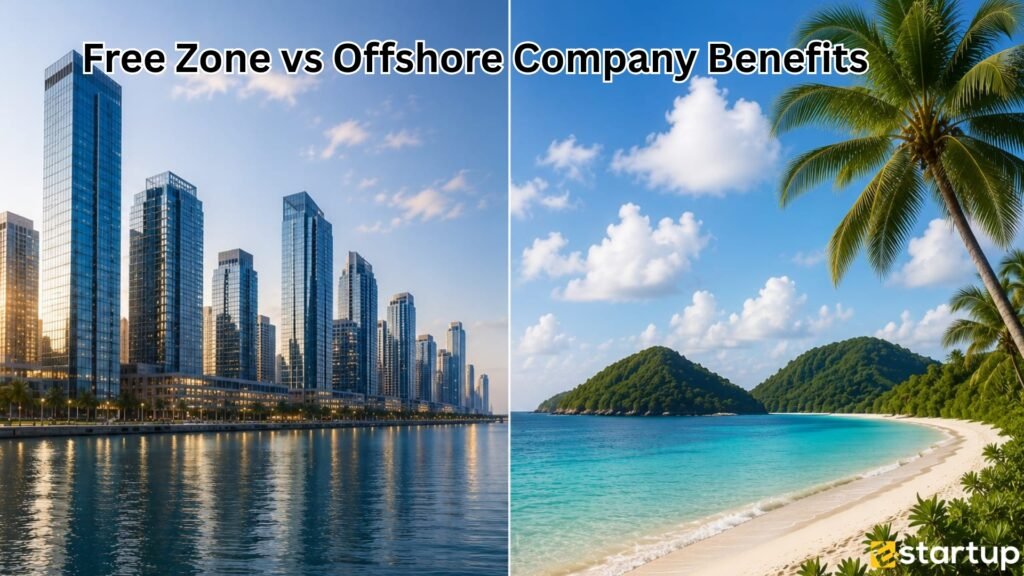
The selection of the correct business model is among the most critical decisions made by an entrepreneur when starting up a business in a foreign country. There are two widely used types of business structures, which include Free Zone vs Offshore companies. Both business structures offer great benefits, including tax breaks, flexible operations, and simple formation procedures. Nonetheless, both business models are designed differently based on the needs and goals.
Knowing the benefits associated with the Free Zone vs Offshore companies models can help businesses select the appropriate option. To learn more about business entities that one can establish in the UAE, you may also find this article interesting: UAE Company Registration for Foreign Investors
What Is a Free Zone Company?
Free Zone company is simply a business that has been incorporated in a particular zone developed by the government to stimulate investment in the region. In a comparison between Free Zone vs Offshore Companies, Free Zones are meant to operate businesses actively. According to UAE Ministry of Economy – Free Zones, there are more than 40 multidisciplinary free zones in the UAE that allow expatriates to own business enterprises fully. Free Zones offer various incentives for companies.
Some common types of organizations that prefer Free Zone companies include start-up companies, trading companies, tech companies, and foreign investors.
Key Features of Free Zone Companies
- 100% foreign owned in many cases
- Simple company formation process
- Taxation advantages
- Modern infrastructure
- Import/export convenience
- License flexibility
What Is an Offshore Company?
An offshore company is a corporation that is created out of the country in which its owner resides, especially when such an entity can be formed in a tax-friendly nation. Offshore companies find application in international trade and financial dealings among other functions.
Unlike free zone companies, offshore companies do not normally engage in any commercial activity in the country of incorporation.
Main Characteristics of Offshore Companies
- Tax exemption or low taxes in certain places
- Confidentiality
- Asset protection
- Less documentation needed
- Operation across borders
- Simple company ownership
Benefits of Free Zone Companies
1. Total Foreign Ownership
One of the benefits of Free Zone companies is that it may be possible to have total foreign ownership without any need to involve locals.
2. Tax Advantages
Free zones provide many tax perks, among which are:
- Corporate tax exemptions in certain cases
- No duties on imports or exports in some instances
- Lower cost of operations
- Investment tax perks
All these can increase business efficiency and profitability.
3. Quick Company Setup
The process of forming a Free Zone company is generally less cumbersome than that of other forms of business.
This allows companies to start doing business sooner.
4. Availability of Business Infrastructure
Among the benefits of Free Zones include:
- Office space
- Warehouse space
- Business centers
- Technology centers
- Support services for logistics
This facilitates business activities at little cost.
5. Opportunities for International Trade
A business established in a Free Zone often enjoys simplified processes for international trade.
This is particularly advantageous for:
- Import/Export businesses
- E-commerce businesses
- Manufacturing businesses
- Logistics businesses
Advantages of Offshore Companies
1. Tax Saving Potential
Tax savings is one of the primary reasons for setting up Offshore companies since there might be a number of tax benefits based on the country’s regulation.
Such potential benefits include:
- Reduced corporate taxation
- Low capital gains taxes
- Reduced tax liabilities
However, businesses need to adhere to both domestic and international tax laws.
2. Increased Privacy
Offshore jurisdictions offer high levels of privacy. Ownership details are kept confidential and not made public in some locations.
This will ensure that a business can keep their affairs confidential.
3. Protection of Assets
Using Offshore companies will mean that a company can have their personal and business assets separated.
Assets typically protected in such cases include:
- Intellectual property
- Financial investments
- Real estate investments
- International assets
4. Minimal Administrative Obligations
Offshore companies may have less compliance issues and administrative requirements compared to regular corporations.
This can save time and:
- Effort
- Costs
- Management resources
5. International Transactions
Offshore structures allow for efficient global operations.
Businesses engaged in international operations like:
- Trading
- Financial investment
- Consultancy firms
- Digital businesses
Offshore structures are commonly found to be advantageous. For detailed information on the functioning of offshore companies in the UAE, please visit our Offshore Company Setup service page.
Differences Between Free Zone vs Offshore Companies
| Feature | Free Zone Company | Offshore Company |
| Physical office needs | Normally needed | Not normally needed |
| Conducting business | Can conduct active business | Restricted business operation |
| Tax incentives | Different tax incentives | Strong tax benefits |
| Ownership | Normally 100% foreign-owned | Fully owned |
| Privacy | Moderate privacy | Confidentiality |
| Market presence | Both local and international presence | International only |
| Supporting infrastructure | Usually available | Less availability |
Which Structure Will Serve Your Needs Best?
While considering Free Zone vs Offshore Companies, this entirely depends on your aims.
If you need any of the following, then choose a Free Zone company:
- Office or warehousing services
- Business freedom
- Active trading
- Licenses for doing business
If you need any of the following, then consider an offshore company:
- International dealings
- Asset security
- Confidentiality
- Low admin costs
Other articles you might like reading:
Choosing a Suitable Free Zone in Dubai for Tech Companies
Top Offshore Companies with Tax Benefits in 2026
Conclusion
Free Zone vs Offshore companies both provide various strengths that can be beneficial when expanding the business overseas. Business facilities and access to markets will be provided by Free Zone companies, whereas Offshore companies give a sense of privacy and taxation benefits.
Knowledge of your requirements is essential when deciding on what type of company will suit your needs better. Correct decision making from the outset may lay the groundwork for further success in the business world.
FAQs
1. What is the major difference between Free Zone company vs Offshore companies?
The major difference consists in purposes and functioning of these business entities. A Free Zone company usually deals with trading and operation, while the Offshore company is aimed at international business activity.
2. Can a Free Zone company be fully owned by foreign investors?
Yes, it is possible to set up a Free Zone company being fully controlled by a foreign entrepreneur, since many countries permit such entrepreneurship conditions.
3. Does an Offshore company need to pay taxes?
Taxes are regulated according to jurisdiction and legal aspects of each specific Offshore business. In most cases, it is required to pay international tax, though there are some exceptions.
4. Is it possible to conduct business activities via Offshore company locally?
No, this cannot be done due to the restrictions on international activities of Offshore companies.
5. What is more profitable for international business? Free Zone company vs Offshore companies?
It depends on the needs of each businessman whether he wants to engage in international trade or not.